Sunday, November 29, 2020

Tomorrow

It was a pleasure to speak at the launch of MK Joseph's long-lost anti-fascist novel Tomorrow the World last weekend. Jack Ross has written about the launch on his blog. Ross has for years been trying to bring Joseph's science fiction to the attention of his fellow academics. 

Thursday, November 05, 2020

Dark enlightenment

She's probably got bigger things to worry about right now, but I've queried the suddenly notorious Olivia Pierson's understanding of the Enlightenment in this twitter thread. 

Saturday, October 31, 2020

Weka Pass

Last week I tramped to Weka Pass Cave, where people made art with charcoal and ochre five hundred or more years ago. Now I wonder: was that iron fence by the cave's limestone overhang intended to keep humans out, or to keep the painted cryptids - writhing eel-birds, lizard-dogs, dancing insect-men - in? When I close my eyes creatures surface, through the blackness.

Caves like this are not only sacred to Maori. Generations of Pakeha artists travelled here, to learn what could not be learned in the polite galleries of tight little colonial towns. I could sense Tony Fomison and Theo Schoon, as I squatted beside the cave mouth. Both men were possessed by these caves, and this art: both spent years in these limestone galleries.

Monday, October 05, 2020

Warriors in wood


I've written about the syncretic and subversive sculpture of Whare Joseph Thompson for EyeContact. 

Monday, September 07, 2020

The old gods

Some conservative older Pakeha are complaining about Labour's promise to make Matariki, or Maori New Year, a public holiday. They say Matariki was never part of their childhoods in the '60s or '70s. That's not surprising. Matariki is a Polynesian religious celebration, & indigenous religion was outlawed in New Zealand between 1907 & 1962 by the Tohunga Suppression Act. Tohunga, the priests of Maori religion, were fined or jailed. Whare wananga, where knowledge was passed between generations, went underground. Matariki celebrations would have been unthinkable in mainstream New Zealand society. By making Matariki a public holiday now, New Zealand can make some restitution for the repression of the ancient religion of these islands.

Matariki is a Maori celebration, but it has parallels in many other Polynesian societies. In Hawai'i, for example, the festival Matahiki sees tributes to the god of fertility Lono, cousin of Aotearoa's Rongo. By making Matariki a holiday, New Zealand can remember ancient Pacific connections.
In many parts of the Pacific, Christian indigenous spiritual beliefs and practices are still repressed. My friend the Tongan artist Visesio Siasau, for example, endures abuse & discrimination because he rejects Christianity & follows his country's ancient gods. In Tahiti, the self-proclaimed 'pagan' Moana'ura Walker has overcome a history of Catholic authoitarianism and established a thriving indigenous temple. By making Matariki a holiday, New Zealand will send a message of support to Siasau and to activists in other Pacific nations suffering from Christian oppression.

Friday, September 04, 2020

Influence


Many critics say that Rothko is outdated, irrelevant, that his blocks of layered colours & mystical ambitions represent a cul de sac in art history. What do they know? On the walls of the industrial belt of West Auckland Rothko's influence is immediately apparent.

Sunday, August 23, 2020

A wormhole

Aucklanders may not be able to move far in space, but the realm of time is still open. A wormhole took me back to 1887. I wrote about the journey for EyeContact.

Wednesday, August 19, 2020

Lockdown reading


When I was ten years old Khmer refugees arrived at my school, & my parents took me to see The Killing Fields at St James cinema. Since then I've been fascinated by Pol Pot & the Khmer Rouge; there is something about evil that is compelling as well as repulsive. I've been rereading Philip Short's massive, disturbing, and brilliant biography of Pol. 

I think that the quiet of lockdown Auckland must have subconsciously reminded me of footage of the empty city of Phnom Penh in the years after the Khmer Rouge marched two and a half million urbanites into the countryside. Short shows how the Khmer Rouge appropriated Theravada Buddhist as much as Marxist ideas. He reproduces this photo of Khieu Samphan, Pol Pot's future lieutenant, dancing in Paris in 1955, at a celebration of the Buddha's 2,500th birthday.

Monday, August 03, 2020

Rekohu notes


19/7
In one day Rekohu/Chatham/Wharekauri gave us five rainbows. I kept thinking of the back cover of Binney's great biography of Te Kooti, which shows a rainbow over Te Whanga Lagoon. The prophet & his followers escaped from their prison here in 1868, crossing the 'Red Sea' back to Aotearoa.

20/7
I visited the statue of Tommy Solomon, who was falsely called the last Moriori. In the '80s Robin Morrison gathered three of Tommy's grandchildren in front of the statue, & made a famous photo, a symbol of continuity. The energy of the ancestor flows into living flesh and blood.

22/7
In 1835 Rekohu was colonised not by whites, but by two Taranaki iwi. I am used to hearing fellow Pakeha talk about divisive indigenous activists, about the virtues of assimilation. On this island I hear the same words in Ngati Mutunga mouths. I have entered an alternate reality.

23/7
I walked Petre Bay, between sandhills & surf. In 1919 HD Skinner found Maori material on the top dune layers & Moriori middens on the bottom. Thousands of shells still stick out of the sand: I imagine them as old tongues trying to speak over the ignorant roar of the sea.

24/7
The woman who guided me through a Moriori forest said trees can communicate thru roots: can thank, warn. Riding home thru a gale, I wondered: can these bent trees & phone poles talk, or have their tongues become mutually unintelligible, like those of long separated peoples?

25/7
The frail bookworm Jorge Luis Borges used to listen worshipfully while the knife fighters of his native Buenos Aires talked about their trade. I felt like Borges last night, when a man who dives for paua in the feral seas off Rekohu told me the best way to chase off sharks.

27/7
Floating above the tundra of the clouds on the way home from Rekohu, I both hope for & fear severe air turbulence. Only with such tumult could I align myself with the crew of Rangihoua & other waka of ancestors of the Moriori, craft that crossed the southern ocean on storm surges.

Thursday, July 02, 2020

Five theses on the non-existence of the present

1 Wars are fought first in the imagination. The invasion of the Waikato was planned in Auckland; the city's toponyms record its guilt. Pt Chevalier had a firing range; the suburb is named after a top marksman. On nearby Meola Reef a dummy Maori pa was built; soldiers shelled and sniped at it.

2 The photo was taken in the German port of Kiel in 1916. It shows mines being loaded onto SMS Wolf, a raider headed for the Pacific. In April 1919 Edward Whare & two friends were riding down a beach near Raglan. They spotted a strange object, stopped. The smoke column was seen miles away. The war had taken its last victims.

3 Events metastasise. In 1863 imperial troops moving through Ramarama's puriri forest were ambushed & gunned down by Waikato guerrillas. 80 years later Private Bryan Sharp fled from nearby Ravensthorpe convalescent hospital, hid in a remnant of the ancient forest, & shot himself.

4 On an autumn night in 1948 two men - one imaginary, one real - were killed at Auckland's Town Hall. Joe Burns, a professional Canadian-Hawai'ian boxer, lay still after being smashed by local fighter Tommy Downes. Burns' real name was Peni Latinidavetalevu. He was not a pro.

Latinidavetalevu was an illegal migrant from Fiji. He had stowed away on a ship to Auckland & created Joe Burns, complete with a publicity photo & stories of US fights. Fijian police saw the photo & recognised him. He would have been arrested, had he survived his fight.

5 Auckland had a blood moon last month. I don't like that phrase, nor the overproduced photos of the event. Neither can convey the peculiar sense of intimacy I felt, as I looked into the ruddy face leaning over Glen Eden's rooftops. TE Hulme died in 1917, but he saw my moon:

A touch of cold in the Autumn night—
I walked abroad,
And saw the ruddy moon lean over a hedge
Like a red-faced farmer.
I did not stop to speak, but nodded,
And round about were the wistful stars
With white faces like town children.

Sunday, June 21, 2020

Suddenly his mind went blank


Cities smoke, statues collapse, & the oranges in our yard swell & brighten. The indifference of nature is both frightening & consoling. The kids try to knock the oranges out of the tree with sticks. I want to watch them rot & fall of their own accord.

Wednesday, June 10, 2020

Listen to the bishop

As a few articles in the media show, I've been busy arguing that Akaroa's Bully Hayes restaurant and Bar should change its name, and was pleased to find today that the establishment's owner, Wayne Jones, now agrees with me. Jones has rethought the name, and has issued a gracious and generous statement. 

I talked about the issue today on Radio New Zealand. 


I've had a few angry messages from conservative New Zealanders who seem to believe that the Pacific slave trade is a mirage created in recent years by 'woke academics'. I don't think the phrase 'woke academic' fits John Coleridge Patteson, the first Anglican bishop of Melanesia & the William Wilberforce of the Pacific. Patteson died fighting the slave trade.
Patteson ran the Melanesian mission in Auckland & later Norfolk, where young men were trained in Christianity & various trades. In the 1860s he began hearing terrible stories from them, of 'catch catch boats' & stolen villages. Patteson began to write & speak against the slavers.

Thanks to the Anglican church's Project Canterbury, we can now access some of Patteson's denunciations of slavery. They make sad reading, with their accounts of canoes run down & their passengers seized, & islanders made to sign contracts they could not read.

Patteson travelled through the Pacific collecting stories of slave raids. Imperial administrators and some his superiors in the Anglican church began to resent his detailed and withering reports.
Patteson was a brilliant linguist, who eventually learned about a dozen Melanesian languages. He became steadily more sympathetic towards the region's indigenous cultures, & argued against missionaries' attempts to impose Western dress & manners on them.
In 1870 Patteson was recovering in Auckland from exhaustion when he realised that a schooner called the Lulu, a boat funded by Auckland's business elite, had arrived with 27 ni-Vanuatu slaves. Patteson began to campaign against the introduction of slavery to NZ.
Slavers hated Patteson, but knew he was popular on many islands. They began to dress up as him, so that they could lure victims aboard their boats. These masquerades & their continuing violent raids may well have led to Patteson's death.
In 1871 Patteson landed alone on Nukapu Island, in the far southeast of the Solomons. He was slain. Nukapu had recently been raided by slavers. Huge memorial meetings were held for Patteson throughout NZ; resolutions against Pacific slavery were passed.
Britain responded to Patteson's death by sending the HMS Rosario to Nukapu, via Auckland, where its crew played locals in the first international rugby game in NZ's history. The HMS Rosario shelled Nukapu, & armed men stormed the tiny atoll. Dozens of islanders died.
Patteson is revered as a martyr today by many Melanesian Anglicans. For anyone interested in learning about the Pacific slave trade, biographies of Patteson & his own writings are invaluable. It is sad that, nearly 150 years after his death, some still don't hear his message.

Monday, June 08, 2020

Akaroa's slaver


In the US & UK monuments celebrating slavery are coming down. The people of Bristol have thrown the statue of their slaver Coulston into the sea. Here in NZ we have a popular restaurant & bar whose name is a tribute to the most notorious of all the Pacific's slave traders.
Akaroa's Bully Hayes Restaurant & Bar takes its name from the American slaver, sadist & pedophile who preyed on the islands of the Pacific for years, from bases in Apia & the Marshall Islands. Hayes stole islanders & sold them to the plantations of Tahiti, Fiji, & Queensland.
Hayes raped many of the girls & young women he abducted. In his meticulous book The White Pacific, African American scholar Gerald Horne shows that the slaver was protected by high-placed relatives in Washington DC.
The website of the Bully Hayes Restaurant & Bar includes a short account of Hayes' 'colourful' career. Hayes' exploits during the Otago gold rush are noted, but not the slave raids that are still remembered with sorrow on islands across the Pacific.
I ran into Hayes & the restaurant that honours him when I was researching my book The Stolen Island. I was amazed that anyone imagined Hayes a romantic, even admirable figure. Now would be a good time for the restaurant to rethink its moniker.
Here's the website for the restaurant & bar. Here's their facebook page. I imagine that many New Zealanders would feel reluctant to eat and drink at the place, if they knew that its name celebrated pedophilia and slavery.

Tuesday, June 02, 2020

The ruin


We spent the long weekend with my brother-in-law, who has resettled in the Kaipara. We watched his old American neighbourhood burn on TV, then walked into the hills to look for kaka. A black fungus covered the trunks and branches of manuka and kanuka, so that they resembled victims of forest fires.
On the way home we stopped at Warkworth's cement factory. New Zealand's factories are its ruined abbeys. They commemorate our Sutchian era of economic nationalism, an era of indigenous car plants and tariffed electronic, an era ended by neo-liberal politicians as ruthless as Henry VIII. Like the mutilated monasteries of England and Wales, Warkworth's factory is beautiful because it represents defeat.

The apocalypse does not belong to science fiction. It is an ancient genre, present in the foundations of English literature. A medieval Briton wrote 'The Ruin', in which he described the wrecked Roman city of Bath as the work of giants who had suffered pyrde (fate). 'The Ruin' survives in a fire-damaged manuscript. I enter the poem at Warkworth's cement works.             

Wednesday, May 20, 2020

The uses of culture

Moment 'Lord of the Flies' castaway returned to island 50 years ...

The world is buzzing over the story of the Tongan teens wrecked on 'Ata Island in the mid-'60s. I've written for Newsroom about the fascination that the castaway has cast for many Westerners, and the reasons Tongans are able to survive spells on desert islands.

My original piece was a rambling blues jam; the adroit Steve Braunias has edited it into a pop song. But nuances have been lost. In the Newsroom text I talk about how Tongan castaways of the '60s were sustained by their willingness to obey leaders, their religiosity, their extreme collectivism, & their habit of sharing. But the relentlessly social & hierarchical nature of Tongan culture can exact a price.

In a passage cut by Newsroom, I talked about the mental illness known to Tongans as 'avanga, which makes sufferers flee to isolated places, like the bush or the seashore, & neglect family duties. The educationalist & dissident Futa Helu was one of the first to study 'avanga.

Helu noted that many of those struck down by 'avanga were young women, & argued that the disease was their subconscious response to the repression of sexuality & individuality. Overburdened by society, oppressed by the Tongan superego, 'avanga sufferers broke free.

To read a Tongan account of the teens on 'Ata & their legacy, check out this piece at The Spinoff.

Sunday, May 10, 2020

An 'Atan utopia?


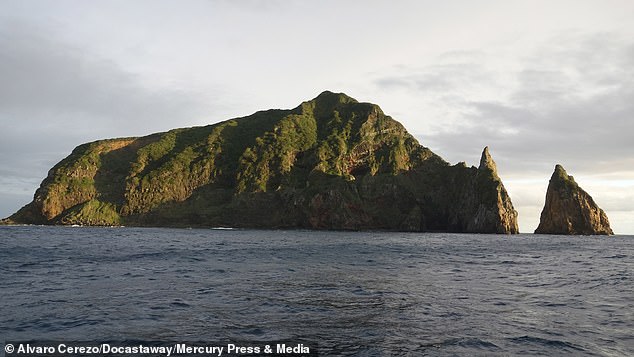
Rutger Bregman has written about the adventures of some young castaways on the Tongan island of 'Ata for the Guardian. In the mid-sixties the group of teenagers stole a boat from Nuku'alofa harbour, got caught in a storm, and were wrecked at the bottom of 'Ata's cliffs. They survived for many months before a fisherman rescued them.
The Guardian has unhelpfully illustrated Bregman's article with a photo of the wrong island. There are two 'Atas in Tonga: one is a cosy atoll near Nuku'alofa, the other is the remote & precipitous place where the castaways ended up.
Bregman is not the first person to write about the castaways. Their story was first told by Keith Willey in his book Naked Island, which was published half a century ago. In 2015 the Spanish adventurer Alvaro Docastaway visited 'Ata along with one of the castaways, who was by then in his sixties. I wrote about their uncomfortable time on the island in a chapter of my book The Stolen Island.
As Bregman notes, the castaways of the 1960s were able to survive on 'Ata because of the gardens and chickens that the island's ancient Tongan population had established. In the early 1860s, about 300 people lived on 'Ata. In 1863 a slave ship from New Zealand took away half the island's population; the rest were soon evacuated to more secure parts of Tonga by King Tupou I.
The castaways worked together to develop the old gardens. They also built themselves fale, held church services, and even improvised a sort of outdoors gymnasium. They were healthy and relatively happy when rescue came.
Bregman's article isn't just an exercise in history. He wants to argue that the castaways on 'Ata show us a different model of human behaviour than dystopian adventure stories like Lord of the Flies. Humans, he thinks, are naturally inclined to cooperate rather than clash.
There's another Tongan castaway story that could be used to bolster Bregman's case. Just a few years before the castaways crashed on 'Ata, a crew of Tongan adults were wrecked on Minerva Reef, another obscure fragment of land between Tonga & NZ. They not only survived for months on the reef's moonscape, but built a new vaka & sailed to Fiji. Olaf Ruhen told their story in a thrilling book.
Bregman's argument about the human potential for cooperation is eloquent & important. But I think there may be a danger of too quickly abstracting the stories of the castaways on 'Ata & Minerva from their cultural context.
On both 'Ata & Minerva, a very Tongan religiosity & respect for hierarchy helped cohere groups of castaways. Prayer sessions & deference to a leader were crucial. Bregman is mistaken if he feels that the castaways established a democracy.
And there is another Tongan 'castaway' story with much less pleasant details. The story reads, in fact, like Lord of the Flies. In 1946 the volcanic island of Niuafo'ou, in the extreme north of Tonga, exploded. Tonga's government sent a ship, & ordered islanders to evacuate their home. Almost all the Niuafo'ouans left; a couple of dozen, though, hid in the bush.
In the classic work of oral history they called The Fire Has Jumped, Wendy Pond & Garth Rogers brought together stories from the evacuation of Niuafo'ou. They also let some of the renegades who stayed on the island talk.
Pond & Rogers showed that the stay-behind Nouafo'ouans threw off many of the customs of Tonga. They discarded their clothes, for example, & they went freely onto the lands of the island's absent noble. Palenapa Lavelua was a 'castaway' Niuafo'ouan & a key source for Pond & Rogers. He presented the years after 1946 as a time of happy hedonism. But a later researcher, Tom Riddle, learned some unhappy facts from Lavelua.
Lavelua had been forcibly removed from Niuafo'ou some time in the late '40s or early '50s. Resettled in the Tongan capital of Nuku'alofa, he spent his days shivering under a blanket, complaining about the Arctic weather of the kingdom's south. Lavelua was allowed to return in '58.
Tom Riddle interviewed Lavelua at length during a stint in Tonga's north. The elderly Lavelua offered Riddle a very different story about Niuafo'ou's stay-behinds. The island had become lawless; morality had collapsed; the sole female stay-behind had been raped repeatedly.
The story Lavelua offered is not rare in human history. There have been at least as many cases of isolated groups of humans behaving barbarously, as they did on Niuafo'ou, as there have been cases of comradeship & courage of the sort that sustained the 'Atan teens.
It seems to me that the most valuable aspect of Pacific history is not the groups of castaways who have lived without conflict for a few months or years, but the ways in which diverse societies have tried to manage conflict in fragile environments. Instead of looking for the emergence of some chthonic goodness in tiny utopian communities of castaways, we should examine the social institutions that Pacific peoples have built up over centuries to deal with the problems - scarcity, aggression, conflict, competition, boredom - that seem to afflict every human society.
James Flexner is an anarchist archaeologist who has written about the mechanisms for handling conflict in Melanesia. His accounts of 'food fighting' in southern Vanuatu, where competitive feasting replaces warfare, are fascinating. Ralph Regenvanu is a Pacific anthropologist & a politician who has studied & tried to extend traditional peace-making & resource-sharing practices. I think the work of Flexner and Regenvanu and similar scholars offer more insights into the Pacific and more political lessons than Bregman's article. Nevertheless, it is exciting to see 'Ata in the spotlight of a major international newspaper.

Saturday, May 02, 2020

Amendments


Along Awhitu's coast, south of the Manukau, the sea has eaten millions of tonnes of clay, of cliff. The red soil ends up on the north side of the harbour, where a new land as flat & perfect as a Dutch polder now extends from the Waitakeres. Nature is a relentless, mad engineer.

At the end of the peninsula a signboard encourages sightseers to hallucinate the Orpheus, the imperial troop ship wrecked by a taniwha-shaped sandbar & Kingitanga waves in 1863. The board's history lesson has been annotated, amended. 


Sunday, April 26, 2020

Why build a fort?


'Ata is a tiny, remote island with virtually no reef and almost impossibly sheer cliffs. Why, then, would its inhabitants build a fort? Archaeologist David Burley is one of the few living humans to have visited 'Ata. In an article for the Matangi Tonga website, he cites my book The Stolen Island, & suggests it might hold an answer to the puzzle of the fort.

'Ata was evacuated after a raid by NZ & Tasmanian slavers in 1863. Its people had lived in a village called Kolomaile, in the island's tiny interior plateau. Burley excavated their pottery & adzes, but he was puzzled by the fort known as Kolomaile Kolota, which was thirty metres by thirty metres in size, and took up precious land that could have been used for gardens or fale.

Burley turns to an 1854 article by anti-imperialist journalist Charles St Julian, which I quoted in The Stolen Island. After describing how Wesleyan war king Tupou I had unified Tonga, St Julian called 'Ata a last redoubt of heathenism. St Julian said the island's religion was an irritant for Tupou I, & predicted the king would try to 'convert' its people.

By the time 'Ata was raided & depopulated in 1863, the island boasted a church. John Thomas, the stern missionary who converted Tupou I in the '20s, even visited the place to hold a service. Did Tupou I take 'Ata by force, & did the inhabitants build a fort to resist him?

In the late medieval era Tonga was the centre of a maritime empire. By the time Tupou I took power, though, decades of civil war had fragmented the realm. Peter Suren, who has studied the remote northern island of Niuafo'ou, believes it was reconquered by Tupou I in the 1850s. In the 1860s & early '70s Tupou's cousin Ma'afu made a determined & almost successful attempt to take Fiji for Tonga.

Tupou I is still seen as a saint by Tonga's Wesleyan ruling class, & Burley has suggested rather than stated outright that he conquered 'Ata. But the idea doesn't seem far fetched. In 2013 the Tongan historian Taniela Vao gave me a memorable tour of his village of Pea, a pagan stronghold that Tupou I besieged & conquered in 1852. Taniela left me in no doubt about the Wesleyan king's determination, & about the ferocity of his army.

Burley's article is one of a series he's been writing for Matangi Tonga about archaeology and the Friendly Islands. Each of his pieces makes fascinating reading. It is a pleasure to see an archaeologist, whose academic work necessarily uses esoteric language & arcane diagrams, writing for a popular audience.

Saturday, April 25, 2020

Dream during a plague


I stand hungrily on a locked down Ponsonby Rd. I notice a sign, a flashing miracle: it says CAFE OPEN. I go inside, & a smiling Jacques Derrida hands me a pink laminated card. His cafe has no kitchen, he says, but I can satisfy my hunger with the words of his menu.

Feeding the monster

This photo reminds me of the story of Athens assembling its young & sending them to be devoured by a monstrous minotaur. Instead of a minotaur, we sacrifice our kids to wars. One of the youths here already wears a uniform. I'm training my boys to scorn the Anzac death cult.