The high-ceilinged white rooms of Artspace are inhospitable at the best of times, but they seemed particularly vast and bleak last week, because some fastidious cleaner or ferociously minimalist curator had emptied the Karangahape Road gallery of the dour installations it normally holds. The New Zealand Film Archive lodges in the same building as Artspace, and seems to share its neighbour's frosty way with design. After turning up to the Archive to watch a preview of Paul Janman's feature-length documentary
Tongan Ark, I was ushered into a room with walls so pale they seemed to glow, even after lights had been dimmed and Paul's film had begun to play. The images in the opening frames of
Tongan Ark - a wave sloshing on a reef, coconut trees leaning into a tropical wind, schoolkids chasing pigs through a plot of taro - were so warm and sensuous that they seemed in danger of melting the room that held them.
Made for a mere thirty thousand dollars, half of which was provided by Creative New Zealand, Janman's film is a study of
Futa Helu, Tonga's most famous intellectual, and the 'Atenisi Institute, the penurious but profoundly influential private university Helu founded in 1966.

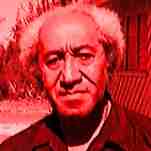
As a student at the University of Auckland in the early noughties Janman met 'Okusi Mahina, a Tongan anthropologist with a patriarch's beard, a villager orator's deep voice, and a passion for the nose flute. Mahina had begun his serious education at 'Atenisi, and he told Janman and his other students the story of the institution and its founder.
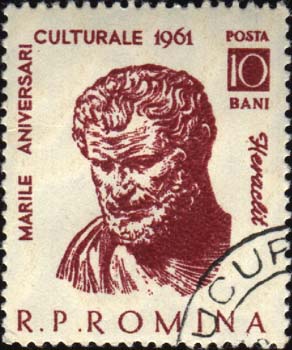
Mahina explained that Futa Helu had been a brilliant young man from the island of Foa, in Tonga's Ha'apai archipelago, when he was sent to the University of Sydney in the 1950s. In Sydney Helu soon formed a bond with John Anderson, a maverick ex-Trotskyist philosopher with a liking for controversy and a love of the pre-Socratic philosopher
Heraclitus.
After returning to Tonga in the early '60s Helu disappointed the country's elite by refusing to take a prestigious government job. Instead, he founded a kava circle in the capital Nuku'alofa, where he discoursed with curious locals about Greek philosophy and Tongan politics. Away from the kava bowl Helu tutored young Tongans in subjects as different as mathematics and English, and it was with the help of these students that he raised a set of classrooms on the swampy western outskirts of Nuku'alofa.
After hearing about Helu's dream of fusing Polynesian and European cultures, and learning about the idealistic young men and women who had left well-funded Western universities to earn subsistence wages teaching and studying with the great man, Paul Janman knew that he had to make his own journey to 'Atenisi.
When he arrived in Nuku'alofa to begin a stint at 'Atenisi, though, Janman was puzzled and disappointed. There was no committee to greet him at the gates of the school, and no obvious curriculum for him to teach.
Over the coming weeks and months, as he submitted to the rhythms and rituals of 'Atenisi life, drinking kava with other staff members, discussing Heraclitus and the problems of Tongan society with Futa Helu under a banyan tree, and reading and rereading the small selection of books in the university's humid library, Janman began to understand the way 'Atenisi worked, and the role it had come to play in Tongan life.

Like his Greek heroes, Futa Helu was a thinker nourished by a pre-industrial society, a society which lacked the modern distinctions between work and leisure, public and private life, and the arts and the sciences. Like Socrates or Plato, Helu had turned his life into a series of relaxed yet earnest dialogues. He saw disagreement and critique as an essential route to human progress. New employees, eager students, journalists, pro-democracy activists, trade unionists, and Tongan royals all came to the door of his shabby office, or sat down at his kava circle, but anyone who asked him easy questions or sought from him soundbite-sized quotes was invariably disappointed.
As a devotee of Heraclitus, the philosopher of change and bewilderment, Helu had little enthusiasm for definitive answers and snappy slogans. As an advocate of dialogue between Western and Tongan cultures and pre-modern and modern ideas, he had a vested interest in upsetting, or at least complicating, the presuppositions of pushy palangi journalists and smug Tongan nobles.
Under Helu's watch, 'Atenisi became an island within an island, a zone of freedom for both palangi intellectuals tired of the commercialisation and instrumentalisation of Western universities and for young Tongans - dropouts, artists, enemies of the monarchy, petty criminals - unable to accept unquestioningly the hierarchies and regulations of their society.

Paul Janman's years at 'Atenisi changed both his thinking and his teaching. The highly structured, meticulously argued essays he had written at the University of Auckland gave way to freer, more meditative texts, which were sometimes written in verse as well as prose. Janman grew accustomed to teaching outside as well as inside the classroom, so that he might find himself helping his students hang out their washing or feed their pigs at the same time that he helped them analyse
Don Quixote or
Moby Dick.
In
Tongan Ark, Janman tries to share with us the bewilderment he felt during his first weeks and months at 'Atenisi, as well as the appreciation he gradually developed for the place. The opening twenty minutes of the film offer us a jumble of impressions, as we arrive at 'Atenisi and are given a brusque tour of the institution. We see staff members giggling around a table in a run-down room, as they discuss some aspect of an impenetrable curriculum. We watch students gathering outside a classroom, and try to decipher their strange patois, which mixes African-American slang with Tongan phrases and pieces of the old-fashioned version of English still taught in Tongan primary and secondary schools. We see skinny dogs patrolling the rutted road that leads to 'Atenisi, a pig roasting over a fire in the school grounds, and staff sipping kava. We see an elderly Futa Helu, wedged between a Greek vase and what looks like a polystyrene copy of one of the pillars of the Parthenon, explaining that as he "gets older" he "goes back more and more to the old Greeks" for inspiration. We wonder how the film is going to bring these fragments together.

In the short talk he gave to introduce
Tongan Ark, Janman explained that he had tried to organise his movie not with a linear narrative or a logical argument but "around a series of paradoxes". Such a structure is, Janman suggested, appropriate to the dialogic practice of Futa Helu and his Greek progenitors.
And, sure enough, after its chaotic first twenty minutes,
Tongan Ark presents us with a series of contradictions. We see Helu proclaiming, in the midst of the dilapidated campus he built, that philosophy is "a search for permanence", and then observe him quoting Heraclitus' dictum that nothing is constant except change. We hear Helu calling for the fusion of Greek and Polynesian cultures, and then observe him presiding over one of 'Atenisi's ebullient graduation ceremonies, where he warns his audience not to begin a Tongan dance until a performance of Western classical music has finished. "Let's do European things the European way, then Tongan things the Tongan way", snaps the irritated prophet of cross-cultural exchange, as the graduands sitting behind him giggle. We see Helu gravely describing Dutch culture, with its penchant for order and efficiency, as "problematic", before praising the contribution that Kek, a bearded, long-haired Dutch mathematician with a taste for extravagant earrings and bright dresses, has made as a teacher at 'Atenisi. We asked not to resolve but to ponder these paradoxes.
The structure of
Tongan Ark may owe as much to Polynesian culture as to Heraclitean paradox. Despite his passion for Greece, Futa Helu was a deeply Polynesian thinker, whose knowledge of Tongan dance, music, poetry and tapa saw him act as an advisor to everyone from ethnologists doing research in the villages of Tongatapu to state administrators planning the elaborate dances and feasts which accompany the coronations of Tongan Kings.
As Helu himself notes more than once in his essays and talks, there is a non-linear quality to much Polynesian literature and art. Polynesian oral traditions feature culture heroes and recurring symbolic deeds, not historical characters and discrete events. Polynesian religions emphasised the circular nature of time, not the inevitable end of time beloved of Abrahamic faiths. 'Okusi Mahina tried to sum up Tongan ways of seeing the world and its history when he said that his people "walk forward into the past and backwards into the future at the same time".
Both palangi and indigenous film makers have struggled to find ways of representing the special quality of much Polynesian art and thought. In the fascinating notebook he kept during the making of
Tangata Whenua, the 1977 series that brought Maori history and tradition to New Zealand television screens for the first time, a young Michael King explained that he had learned to 'discard notions of time and relevance', and instead approach his subject matter in 'slow concentric circles'. Janman's abandonment of conventional narrative and argument means that
Tongan Ark arguably operates in a similar manner, returning repeatedly to the same people and the same topics, so that they gradually become more comprehensible.
The first time we watch Futa Helu laud the ancient Greeks his enthusiasm seems peculiar to us, given his position as the head of a struggling school on a small island in Western Polynesia; by the time he returns to the subject much later in the movie, we have come to appreciate the similarities between ancient Greece and agrarian Tonga, and the parallels between Helu's love of dialogue and the practice of garrulous Greek controversialists like Socrates and Diogenes. We learn not treat Helu's sometimes gnomic, sometimes outrageous statements not as isolated propositions, but as moments in an ongoing meditation.
Our understanding of 'Atenisi's students also grows as
Tongan Ark unfolds. As Janman's camera moves through the plantations of Tongatapu and the suburbs of Nuku'alofa, panning disconsolately from the shacks of the poor to the vast residences of royals and church ministers, we come to appreciate the complex, overlapping worlds which young Tongans are expected to navigate in the twenty-first century. We realise that their eclectic vocabularies and varied mannerisms are a response to the demands of living in a society where different moral codes and modes of production contend.
Despite its meandering pace and sometimes abstruse digressions,
Tongan Ark relays an urgent message. The film shows how Futa Helu repeatedly contrasted the 'critical education' offered at 'Atenisi with the 'education for submissiveness' which he perceived in many Pacific schools and universities. Helu was an inveterate critic of both the church-run high schools of Tonga, which he regarded as little more than indoctrination centres, and the University of the South Pacific, which he considered far too interested in the economic outcomes of learning.
American sociologist Michael Horowitz, who was the Director of 'Atenisi from 2008 until 2010, expands on Helu's points when he condemns the 'commercial' mindset of Western societies and the business-driven curricula of many Western universities. Horowitz, who studied with Herbert Marcuse in the 1960s and was involved in the left-wing counterculture of that era, sees 'Atenisi as an oasis of critical thinking and anti-materialism. He thinks that the problems which have beset Helu's university - discrimination from both Tongan governments and Western universities, criticism from Tongan royals and church leaders, the indifference of the increasing numbers of young middle class Tongans who see education only as a route to wealth - are the inevitable consequences of "swimming against a strong stream".
The eeriest of the paradoxes in
Tongan Ark occurs near the middle of the film, where Heraclitus' vision of fire as the essential element of the universe, and therefore as a force for creation as well as destruction, is juxtaposed with Janman's footage of the blazes which destroyed most of downtown Nuku'alofa on the
16th of November 2006, when a pro-democracy protest by young Tongans turned into a deadly riot. Tongans talk about '16/11' in the same fearful, bewildered tones that Americans use to discuss the events of the September the 11th, 2001.

In
Tongan Ark, a number of 'Atenisians cite the torching of central Nuku'alofa as evidence that a mixture of capitalist globalisation and authoritarian tradition have created a profound political and social crisis in Tonga. The thought of Futa Helu, with its critique of both unrestrained capitalism and unreasoning tradition, and its attempt to find a balance between Western and Polynesian ways of life, is offered as an antidote to Tonga's problems. But Janman never makes his attitude to the riot of 16/11 explicit, and it is possible to interpret his film's references to Heraclitean fire as suggestions that the events of that day were somehow necessary and regenerative.

After his film had ended, Janman was joined by 'Okusi Mahina and Michael Horowitz, and the three men invited questions from the audience, which included many 'Atenisi graduates as well as a number of palangi artists and intellectuals. After several former students of Futa Helu had paid tribute to the man, Mahina made a long statement which included both praise and criticism of his old mentor. Noting the title of Paul Janman's movie, Mahina called Helu the "Noah of Tonga". Like Noah, Helu had constructed, in the face of widespread mockery, a vessel which was capable of rescuing his compatriots from the "high waters" of chaos and irrationality. Mahina noted with a chuckle that the analogy with Noah was especially appropriate, because of Helu's role in helping raise and maintain the buildings on 'Atenisi's campus. More than once Professor Helu had taken advantage of a break between lectures to climb a ladder and hammer a few nails into a creaking roof!
But Mahina went on to argue that Helu and some of his proteges - the anthropologist Opeti Taliai, for example, who appears several times in
Tongan Ark - have at times been too uncritical of the Western intellectual tradition, and insufficiently attentive to Tongan ways of interpreting the world. Mahina was sceptical about the claim, made several times in Janman's movie, that Tongan notions of tapu were designed to protect the power of the country's religious and political elites. Mahina suggested that this interpretation of tapu reflects the crude functionalism of Eurocentric anthropology, rather than a real understanding of Tongan society. He argued that the distinctions tapu makes - between clean and unclean objects, sacred and profane places, and so on - were ways in which Tongans "constituted their reality". Tapu offered, in other words, a way of making sense of the natural and human worlds, by dividing and regulating their manifold details. It had not been not, Mahina insisted, a mere political ploy.

Mahina's criticisms of Helu reflect the sustained effort he has made to differentiate his thought from that of his old teacher. Over the last decade or so Mahina has gradually developed what he calls the 'ta va theory of space and time', which aims to fuse concepts drawn from traditional Tongan culture with elements of Western philosophical tradition. A dozen or so PhD students have been busying themselves deploying the ta va theory in their research, and some of them accompanied Mahina to the preview of
Tongan Ark. Opeti Taliai, who is reportedly holed up in the countryside north of Auckland writing a huge book about Tongan history, dissents from some of the key tenets of the ta va theory. Taliai had agreed to come to the preview of Janman's film, but was forced to withdraw from the event at the last minute.
The Kiwi classicist
Ted Jenner has suggested that the fragmentation of the 'Atenisians school of thought parallels the diffusion of ancient Greek intellectual movements - of the Pythagoreans, for instance - in the aftermath of their founders' deaths. Perhaps the fragmentation of an intellectual movement is a sign not of weakness but of dynamism, and of a healthy hostility to dogma.
In a typically long-winded contribution to the discussion that followed the showing of
Tongan Ark, I argued that, whatever the ultimate fate of 'Atenisi University, thinkers like Helu, Mahina, and Taliai deserve to be studied outside as well as inside Tongan society. Just as intellectuals like Marcuse and Benjamin transcended their connection to the bricks and mortar of the Frankfurt Institute, so the 'Atenisians have an importance which transcends the institution Helu founded. With their dream of fusing Polynesian and European cultures, their opposition to both hidebound tradition and globalised capitalism, and their rejection of commercially driven education, the 'Atenisi thinkers have much to teach us in the twenty-first century.
[Posted by Maps/Scott]


.jpg)


.jpg)
.jpg)