Pseudo-history at Dargy museum

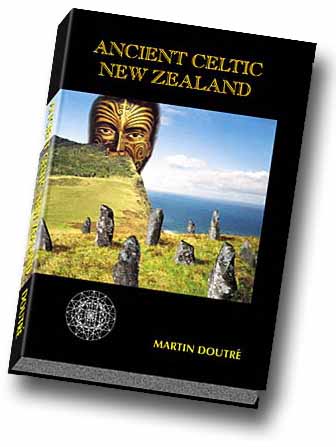
[Along with a number of other masochists, including the regular contributors to this blog Edward Ashby and Matthew Dentith, I've been involved for the last year or so in monitoring the activities of the pseudo-historians who argue, for reasons that are more political than scholarly, that New Zealand was first settled by ancient Celts, or South Americans, or Chinese, or 'Waitaha' - by anyone, it seems, but Maori.
Up until now, the pseudo-historians have been discovered lurking in trashy giveaway papers like the Franklin E Local, or on badly-designed websites that tend to disappear when they're subjected to scholarly scrutiny. Yesterday, though, I was dismayed to discover that pseudo-history has gained a foothold in one of New Zealand's larger provincial museums.
What follows is the text of an e mail I've just sent to the director of Dargaville museum: if you feel moved to send your own complaint, you can reach her at darg.museum@xtra.co.nz]
I am e mailing you because I visited Dargaville museum yesterday, and was perturbed by your institution's treatment of New Zealand prehistory.
My concerns focus on the presentation and interpretation of the large pou which forms the centrepiece of your room of prehistoric artefacts. Because I am going to take issue with many of the claims it makes, I will quote the caption which accompanies the pou in full:
Pouto Ki Rongomaraeroa
This ancient 2.7 metre pou carved with stone implements from kauri was discovered in sand dunes near Pouto Point after a storm in December 1991. It is thought to have been the right hand entrance of a Waitaha village known as Matuinga.
The carving, called Pouto Ki Rongomaraeroa, is the only one of its kind to be restored and put on display in a public place.
It is different in type and design to Maori carvings, reinforcing the theory that the Waitaha had different origins and a longer history in New Zealand than Maori. The Waitaha lived in settlements around much of New Zealand's coast.
The carving was found by Dargaville woman Maxine Stringer, and after specialised preservation by Auckland University it was returned and installed in the Museum during a dawn ceremony led by Waitaha kaumatua (elder) Patrick Ruka in December 1996
A storm in 1950 uncovered the remains of a Waitaha village the carving probably belonged to, but sand covered the site again before excavation could take place.
The caption I have quoted gives the impression that there is an intellectually credible theory which holds that a people called Waitaha inhabited New Zealand before Maori and still live here today. I don't think I would be exaggerating if I said that there is not a single scholar of New Zealand's prehistory who would endorse such a 'theory'.
When historians, archaeologists, museum curators, and experts on whakapapa talk about Waitaha, they are referring to the iwi which originally inhabited the South Island. The Waitaha were a Maori tribe, not a non-Maori people. Their control of the South Island was ended by the arrival of first the Ngati Mamoe and then the Kai Tahu tribes. First the Ngati Mamoe absorbed Waitaha through conquest and intermarriage, and then Kai Tahu absorbed Ngati Mamoe through the same process.
Although some Waitaha stories, songs, and sacred places were incorporated into Kai Tahu culture, the group had long since ceased to exist as a distinct entity by the time Europeans arived in the South Island in the late eighteenth century. The 1994 Treaty settlement between Kai Tahu and the Crown affirmed that, because they had taken over the land, absorbed the people they had found there, and lived in possession of the land for hundreds of years, Kai Tahu were the tangata whenua of the territory that was originally inhabited by Waitaha.
Your museum's claim that Waitaha were a pre-Maori people who lived all around New Zealand seems to derive from a series of very eccentric books published by a man named Barry Brailsford. In the 1980s Brailsford enjoyed a reputation as a serious researcher into New Zealand prehistory, but at the beginning of the 1990s he began to make a series of very strange claims about the existence of a hitherto-unknown 'nation of Waitaha'.
According to Brailsford, this 'nation' had been established in New Zealand thousands of years ago by a technologically advanced people with supernatural powers who had journeyed across the ocean from South America to these islands. The people of Waitaha supposedly built pyramids, huge stone statues, and stone roads in their new home, but they were pacifists, and were eventually conquered by the ancestors of the Maori. Brailsford claimed that he was given his 'information' on the 'nation of Waitaha' from a handful of survivors of the nation, but critics like Kai Tahu leader and historian Tipene O'Regan have pointed out that most of these 'Waitahans' were actually Pakeha.
Brailsford's 'theory' of a Waitaha 'nation' has been treated with disdain by serious scholars of New Zealand's past. Brailsford's critics have pointed out that it is very unlikely that a large, technologically advanced civilisation existed in New Zealand thousands of years ago.
The importation of rats and large-scale fires are almost always corollaries of the human settlement of virgin islands, yet analysis of pollen spores shows that our forests were largely undisturbed by man-made fire until less than a thousand years ago, and analysis of ancient seeds suggest that rats did not reach our shores until about the same time. No human remains or artefacts have been found close to, let alone below, the layer of ash left by the last eruption of Taupo eighteen hundred years ago. The huge ancient cemeteries, buried roads, and massive ruined stone structures we would expect to find if the Waitaha theory were true have never turned up. Michael King summed up the attitude of scholars and Maori when he wrote in his Penguin History of New Zealand that 'not a skerrick of evidence' exists to support the theory of a pre-Maori Waitaha nation.
I have been unable to find any information about the 'Waitaha kaumatua' Patrick Ruku mentioned in the caption in your museum. I assume, though, that he is one of the handful of people who have identified with Barry Brailsford's mystical ideas about New Zealand pre-history.
 The caption in Dargaville museum claims that the pou found on Pouto peninsula is 'different in type and design' to Maori carvings. This is a very odd assertion, because both the function of the artefact and the motifs carved onto it are immediately recognisable as Maori. Anyone who visits a large collection of Maori carvings - the collection in the Auckland War Memorial Museum's Maori Court, for instance - will notice many large carvings which were intended to stand either as gateways to important spaces - marae, cultivations, or burial grounds - or as markers denoting boundaries of one sort or another.
 The spiral motif carved on the pou is ubiquitous in Maori art. The relative simplicity of the carving may indicate that the pou belongs to the early period of Maori culture and art, before the more intricate carving style made famous by meeting houses like the Auckland museum's Hotunui evolved. Many examples of early Maori carving have been found in Northland - the Kaitaia lintelpiece, which is the oldest known Maori artefact, is a good example. There is no reason to treat the pou at Dargaville museum as the product of a non-Maori culture.
The reference to the University of Auckland in your caption implies that the institution is in some way associated with and supportive of claims about a 'Waitaha' civilisation. The pou may have undergone some work in the conservation lab at the university's anthropology department, which is open to outsiders, but I am certain that none of the staff or students at the department would want to be associated with the claims you are making about New Zealand prehistory.
I was saddened not only by your interpretation but by your presentation of the pou found at Pouto. It is normal for museums to display pou in an upright position. Pou were intended to stand upright, and museum visitors have a better chance of understanding the function and meaning of an object if it is displayed in the way its makers intended. There are cultural as well as educational reasons for displaying pou upright: because of the mana that the objects had, many Maori find it offensive to see them prostrate. Instead of displaying the Pouto pou in a manner that is educationally and culturally appropriate, Dargaville museum has chosen to lay the object in a container that resembles a glass-topped coffin.
After seeing the pou and the caption accompanying it, I talked with a member of the Dargaville museum staff. When I asked her how the museum could justify its claim about a pre-Maori Waitaha people, she told me, very firmly, that archaeologists had uncovered 'pre-Maori' settlements during digs 'down on Pouto peninsula'. Compared to the rest of Northland, Pouto peninsula has received fairly intensive archaeological investigation, but none of the site surveys and excavations conducted in the region has ever uncovered signs of a pre-Maori civilisation.
When I asked the staff member whether she was aware the scholarly community rejected the idea of a pre-Maori people, she replied 'Well, they would say that, wouldn't they?' She explained that Maori communities and the archaeologists and historians who work with them have a 'vested interest' in suppressing information about a pre-Maori people. When I asked her whether the Dargaville museum had consulted the Ngati Whatua subtribe Te Uri o Hau, who are the tangata whenua of the Dargaville area, about the Pouto pou, the staff member replied that 'the Maoris[sic] aren't interested'.
When I examined the rack of books offered for sale near the entrance to your museum, I was unable to find a single text by a trained historian or archaeologist. I did, however, find two books by Gary Cook, a self-styled expert on 'mystic realms' and 'alternative history' who wanders the backblocks of New Zealand searching for ley lines and 'energy sites'. It goes without saying that Cook's work is not normally found in museum bookshops. In the space where visitors can watch 'educational' DVDs, I found a copy of a 'documentary' called Who Was Here Before Us? in which Cook, Brailsford and a series of other pseudo-scholars expound their strange ideas.
Dargaville museum is a beautifully situated institution with some fine objects in its permanent collection. It has the potential to play an important role in educating New Zealanders about their past. At present, though, the museum is engaged in misrepresenting a large part of our nation's past by promoting the absurd Waitaha myth, peddling works of pseudo-scholarship, and answering visitors' questions with misinformation. I believe that the museum should rectify these faults by forging relationships with scholars experts in New Zealand's pre-history, and with the tangata whenua of the Dargaville area. Museums have a responsibility to represent the past accurately, and under the Treaty of Waitangi they also have a responsibility to work in partnership with Maori when they store and display taonga like the Pouto pou.
I will be sending copies of this e mail to individuals and groups who may be affected by and interested in the misrepresentations at Dargaville museum.
Sincerely
Scott Hamilton
posted by maps at 10/12/2009 02:12:00 pm
93 comments